How WireMe Secures Your Smart Wallet

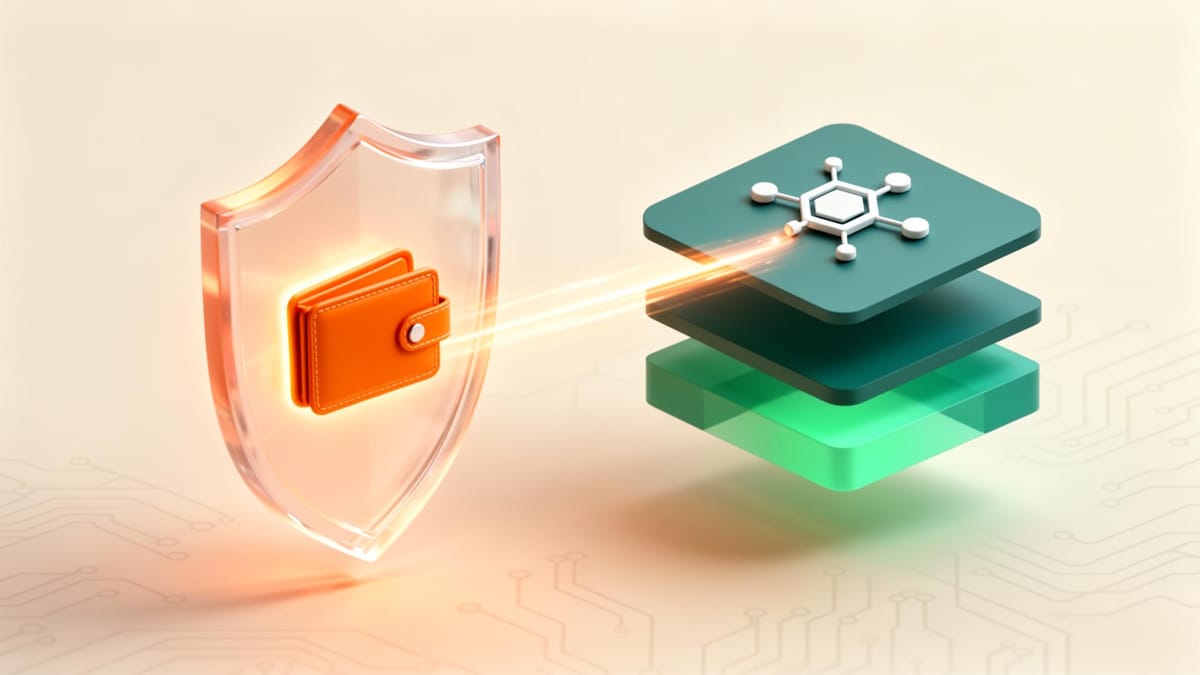
Most crypto wallets put the burden on you. Lose your seed phrase? Lose everything. WireMe works differently. By default, we manage your wallet's keys, but we do it in a way that's designed to protect you even from us. This is how.
Your wallet has a bouncer
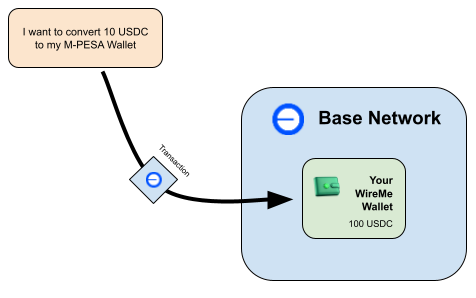
When you want to interact with your WireMe wallet, the most intuitive approach is to send a transaction straight to your wallet. And that makes sense. Your wallet lives on the Base network, it holds your funds, so why not go direct?
Here's why that won't work.
Every WireMe wallet is protected by a WireMe Safe. This is a second smart contract that sits in front of your wallet and controls what gets through. A transaction sent directly to your wallet will be rejected before it ever touches your funds.
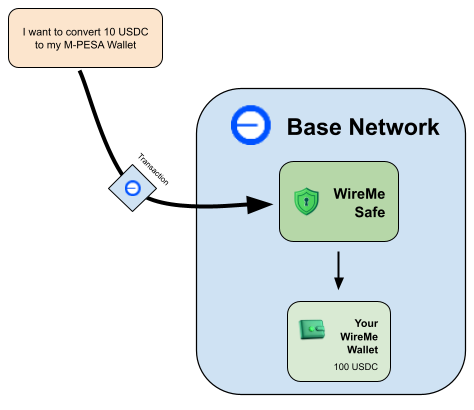
The Safe checks the signatures
The WireMe Safe doesn't accept just any transaction. Before it will execute anything, it requires proof that the right parties authorized it. This takes the form of cryptographic signatures.
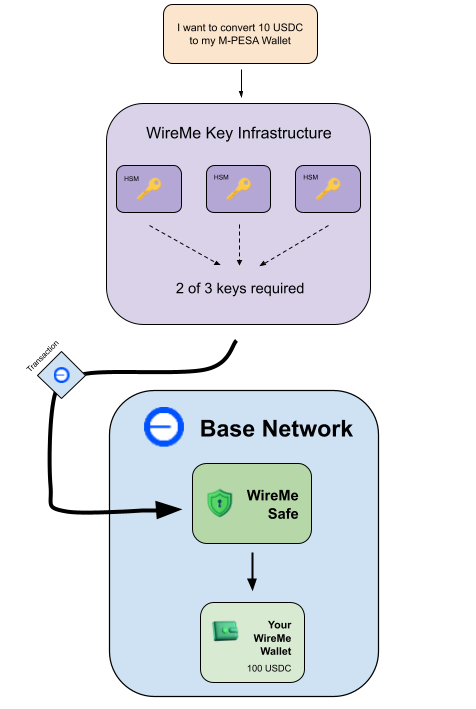
WireMe maintains three keys, each stored in its own Hardware Security Module (HSM). To approve a transaction, at least two of those three keys must sign it. Only once that threshold is met will the Safe allow the transaction to pass through to your wallet.
This is called a multi-signature scheme, and it's what makes the system resilient. No single compromised key can move your funds. An attacker would need to breach two separate HSMs simultaneously – devices specifically engineered to make that effectively impossible.
Keys that never leave home
So what actually keeps the actual keys safe?
Each of WireMe's three keys lives inside a Hardware Security Module, or HSM. These aren't ordinary servers or cloud storage. These are purpose-built devices designed around a single guarantee: once a key is generated inside an HSM, it never leaves. Not to another server, not to a database, not to us.
That last part matters. WireMe engineers have no way to extract or view your keys. The HSM won't allow it. Signing operations happen inside the device itself, and only the result comes out. The key stays locked in hardware.
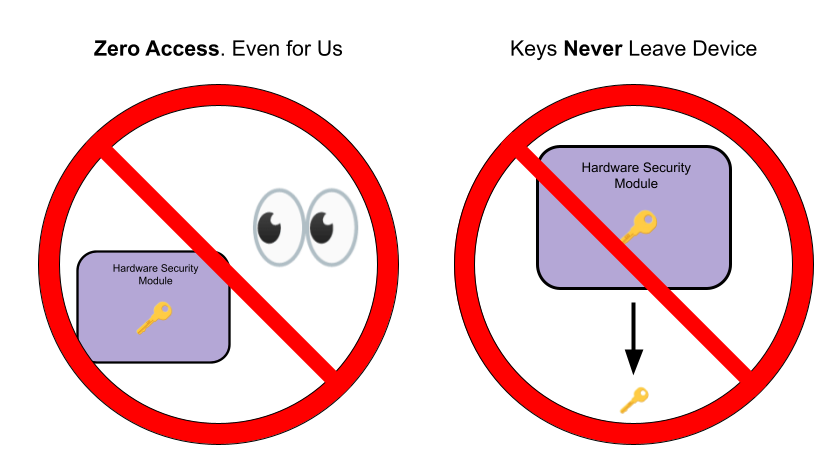
This is what "Zero Access. Even for Us" means in practice. It's not a policy we chose to follow. It's a physical constraint built into the system.
Built for trust, designed to not need it
A fair question at this point is: what happens if WireMe goes away? Or what stops WireMe from moving your money without your permission?
These are the right questions to ask of any platform that holds your keys. Here is how WireMe answers them.
You can take full control at any time
After creating your WireMe wallet, you have the option to authorize your own EOA (Externally Owned Account) to interact with it directly. Once you do, you don't need WireMe at all. You can send transactions to your wallet entirely on your own terms, through your own keys. WireMe becomes optional infrastructure rather than a dependency.
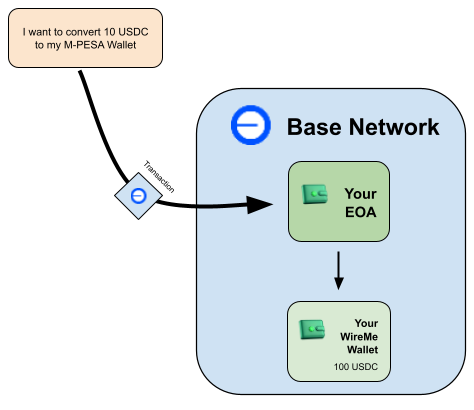
Your funds stay exactly where you left them
Because your wallet lives on-chain, every transaction is publicly visible and verifiable. WireMe cannot quietly move your funds into a liquidity pool, lend them out, or touch them in any way without it appearing on the blockchain for anyone to see. This is a fundamentally different model from centralized custodians, who hold your funds in opaque internal systems and can do whatever they like with them behind the scenes.
You can verify our security
With centralized custody platforms, security is a black box. You have no way of knowing how many signing keys exist, who controls them, or what protections are actually in place. They could be running every transaction through a single key and you would never know. WireMe's security model is built on open smart contracts and verifiable on-chain logic. The guarantees in this article aren't marketing – they are auditable.
Take a look at our Safe smart contract on Base for yourself
What this means for you
No seed phrase to lose. No trust required. No black box.
Your funds sit in your wallet, visible on-chain, protected by hardware that even we can't bypass. And if you ever want to use your own keys, you can.
That's the whole point.