What Last Week's Exchange Freeze Taught Freelancers About Getting Paid
When exchange withdrawals froze, freelancers who had already been paid couldn't touch their money. Withdrawals are back, but the lesson stays: getting paid isn't finished until your money is somewhere you control.

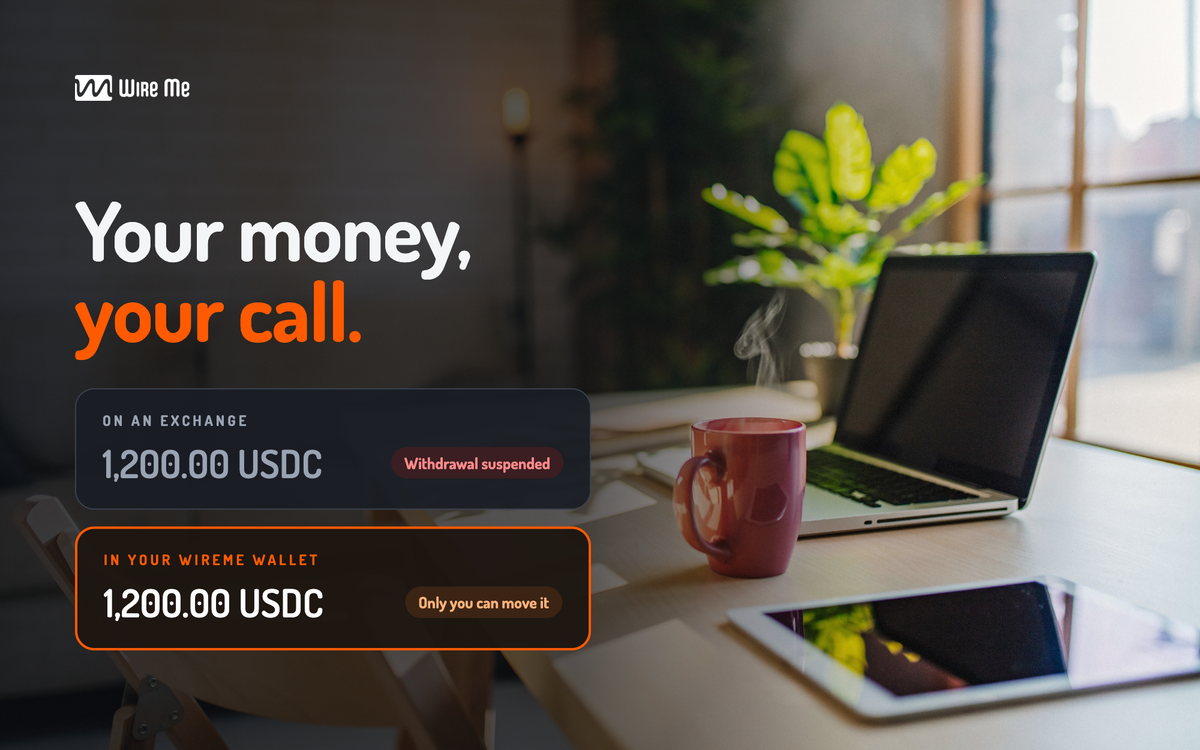
Freelancer's desk with a USDC balance shown as withdrawal suspended on an exchange, next to the same balance in a WireMe walletLast Thursday, freelancers across Kenya opened their exchange apps to cash out client payments and found a message they couldn't do anything about: withdrawal suspended.
By Sunday, withdrawals were coming back. Rates have settled. For most people, the money is there. But anyone who spent those days waiting knows the feeling didn't fully go away. If it happened once, it can happen again.
This post looks at what last week actually taught us about getting paid, and what freelancers and P2P brokers can do now, while things are calm.
What happened, in brief
On Thursday 29 October, attackers drained an estimated $6.3 billion from Binance's hot wallets, the online wallets an exchange keeps ready to process withdrawals (The Block, TechCrunch). Binance paused withdrawals across multiple networks while it investigated.
Credit where it's due: the response was fast. Binance said it had replenished 90% of the stolen assets and would cover the rest (The Block). It began restoring withdrawals in phases on Sunday 1 November, and by midday UTC all 15 networks and assets in the first phase were open again (Binance on X), including the main stablecoin networks.
The part that doesn't go away
The funds came back. The control never left the exchange.
For a few days, a lot of people had money they had earned but couldn't move. Think of the freelancer who sent an invoice on Wednesday with an exchange deposit address on it. The client paid on time. The money arrived. And then it sat there, while rent, school fees and suppliers waited.
Think of the P2P broker making a small margin on each trade. A broker's float is their stock. With withdrawals paused, there was nothing to sell, and the customers waiting on M-Pesa went somewhere else.
Neither of them did anything wrong. They were simply on the wrong side of a decision someone else made. And when withdrawals reopened, Binance processed about $3.64 billion in net outflows in the first few hours (The Block). Many users moved their money out the moment they could.
This wasn't a one-off
It's tempting to file last week under "rare event, now fixed". But pauses like this are built into how custodial platforms work.
When an exchange holds your funds, it has to protect everyone's money at once. When something goes wrong, the safest move for the platform is to stop everything. That's a reasonable decision for the platform. It just isn't your decision.
It has happened before. In 2019, Binance suspended deposits and withdrawals for about a week after hackers stole around $41 million in bitcoin (The Block). Other exchanges have paused for hacks, maintenance, regulation and network upgrades. None of these mean an exchange is bad. They mean that if someone else holds your money, someone else decides when you can move it.
Custodial vs non-custodial, in plain words
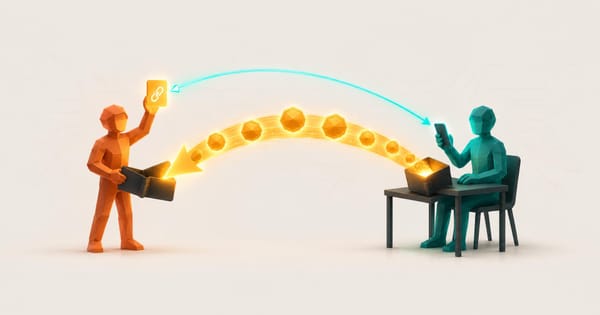
A custodial platform holds your money in its own wallets and keeps a record of what you're owed. A non-custodial platform holds your money in a wallet that belongs to you, and can not suspend your access to it.
The third row matters most. WireMe manages security for you by default, so there's no seed phrase to lose (how WireMe secures your smart wallet). But you can always take full control: export your wallet and send your USDC anywhere, without WireMe being involved (step-by-step guide).
The honest trade-off: full control comes with responsibility. If you export your private key, guard it. Anyone who has it can move your funds, and no one, including WireMe, can reverse a confirmed transaction. New to the terms? The WireMe glossary explains them.
What to do now, while things are calm
The best time to change how you get paid is before the next pause, not during it.
For freelancers
- Put your WireMe wallet address on your invoices. Open WireMe, tap Deposit, then Copy Payment Details. That copies your address and network together, ready to paste (one-tap guide).
- Update invoices already sent. If a client hasn't paid yet, send a short note with your new payment details before they do.
- Cash out on your own schedule. Sell to a broker on the WireMe order book and see your exact KES payout before you confirm.
For P2P brokers
- Keep your working float in a wallet you control. Your float is your business. If it's frozen, so is your income.
- Don't keep everything in one place. Spread funds so that one platform's pause doesn't stop you trading.
- List on WireMe. Post your rates on the order book and reach freelancers cashing out to M-Pesa (broker onboarding guide).
Frequently asked questions
Why do exchanges suspend withdrawals? To protect funds during a security incident, maintenance, a network upgrade or a regulatory request. While the pause is on, users on that platform can't move their money.
What is a non-custodial wallet? A wallet where your funds sit at an address you own, rather than in a platform's pooled account. You decide when the money moves.
Can WireMe freeze my USDC? Your USDC sits in your own smart wallet on Base. You can export your wallet and withdraw without using the WireMe app at all (here's how).
How do I get paid in USDC in Kenya with WireMe? Copy your payment details from the Deposit screen, add them to your invoice, and cash out to M-Pesa through a broker on the order book once you're paid.
Is my money on Binance safe now? Binance says it has covered the losses and restored withdrawals on the main networks. Check its official channels for the latest on specific assets.
Paid should mean paid
Last week ended well, and that's good news for everyone in the community. But the lesson is worth keeping: getting paid isn't finished until the money is somewhere you control.
Set up your WireMe wallet, get your payment details in one tap, and put them on your next invoice. Ready to switch? Apply for your WireMe account and our team will walk you through setup.
For more on why we built WireMe this way, read Crypto Solves Money. It Still Can't Solve the Wallet.
Sources
The Block: Binance sees $3.64 billion in net outflows after reopening withdrawals following record hack (1 November 2026)
TechCrunch: Binance pauses withdrawals as hackers suspected of stealing billions in crypto (29 October 2026)
Binance on X: withdrawal restoration update (1 November 2026)
The Block: Binance reopens deposits and withdrawals a week after $41M hack (15 May 2019)